As we have covered in the Tyre and Wheel page, the performance advantage of these devices can have a big impact on the overall optimization, lets explore the different upgrades available and some tuning options further and quickly review.
You could spent a large amount of money on upgraded braking systems, complex suspension components or more engine horsepower, but with out good mechanical grip. These could end up being a waste of resources to maximise your upgrade efficiency, so it is always best to start from the ground up.
Upgrading Car Wheel Guide
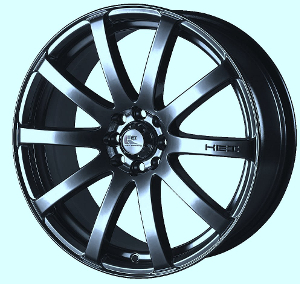
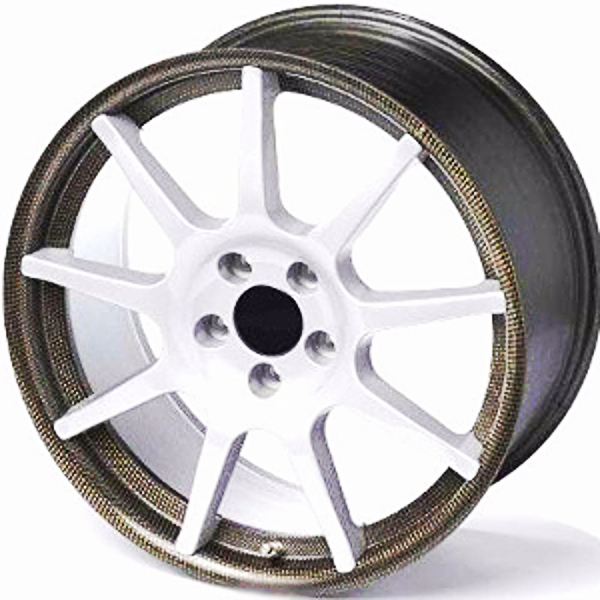
A well designed wheel gives us a lot of advantages over standard specifications, first of all is the ability to pick the construction material. Steel wheels are heavy, light weight aluminium wheels can aid in reducing unsprung mass and increase, accelerating, braking and cornering forces. There are a number of different materials available depending on budgets- even going as far as carbon fibre and no doubt other exotics on the horizon like graphene composites.
More importantly in some respects, is the ability to change the wheel size to fit different tyre dimensions. We can lower the tyres aspect ratio by fitting slightly larger wheels, which will take lower profile and wider tyres. This will result in increased CF (coefficient of friction), which equates to more grip, further increasing the handling, acceleration and braking capacities.
Additionally, wheel designs can aid in the braking efficiency of the car, by allowing better airflow to the brake discs. Effective in reducing brake fade and brake fluid boiling points in check under hard or extreme conditions. Also more importantly in some cases allows for the fitting of larger brakes, to further increase performance.
The main point to bear in mind is that too much of anything is not a good thing as there can be a point where the added weight, cost of tyres/ tires and other affects on unsprung mass and handling performance could be compromised- again a clear upgrade goal needs to be realised for maximum effect. When the thought of upgrading your wheels in on the agenda, there could be other options alone to consider apart from pure wheel size.

Light Weight Performance Wheels
While standard alloys wheels will always be lighter then steel constructions wheels, some designs may of been engineered for a budget to retain manufacturer's profits, or with out weight consideration in mind. Fitting specifically designed lightweight performance wheels will reduce the unsprung mass of the car as well as increasing the strength of the wheel (materials used), they have many benefits:
We have learned that there are advantages of fitting different tyre applications to your car and they are one of the most important upgrades available. Apart from fitting wider tyres with lower aspect ratios. What other reasons are there to invest in new wheels?
One of the greatest advantages of fitting new wheels (apart from the upgraded rubber now available), is selecting a lighter wheel. A lighter wheel will decrease the unsprung weight of the vehicle. Unsprung weight can include wheels, tyres, brakes and some other suspension components. If you jacked the car up, unsprung mass would be any weight not suspended by the chassis. This will directly increase the cars ability to turn in and increase steering precision.
Unsprung weight will affect your car's ability to corner, accelerate, decelerate and brake and its ability to deal with different road conditions. When a car suspension is subjected to changes in the road, the suspension, wheels and tyres have to accelerate rapidly up and down to make sure the wheels stays in contact with the road. If the wheel can not do it's job properly, not only will handling be affected, but vibrations will be transmitted into the car's cabin, resulting in a more harsh ride.
If you have a heavy wheel, this will decrease your car's ability to respond to these varying road conditions quickly enough. You could imagine entering a sharp bend, heavily on the brakes. If you hit a bump or uneven patch of road, this could unsettle the car and cause you to miss the apex or worse still not make the corner. If the wheels can not keep in contact with the road, handling performance will be sacrificed.
With lighter wheels the cars ability to accelerate will increase as it will have less mass to be turned by the engine. Also braking efficiency will increase as alloys and other materials used in their construction are better conductors of heat and will increase the heat dissipation of the braking system. This will result in reducing brake fade and as the wheel design is focused on performance, normally resulting in a more airflow friendly design, used to help cool the braking system.
Careful consideration will need to be taken before embarking on a new set of wheels, especially checking that your desired design is allowed in your chosen Motorsport Category. As there is a number of different materials in constructions including Alloy metals, magnesium and even Carbon Fibre. But with most higher quality materials, the price will rise and it all comes down to the goals and objectives of the upgrade path.
Pitch Circle Diameter
Pitch Circle Diameter or also known as the Bolt Circle Diameter (BCD) is the measurement of the the circumference of the centreline of the wheel nuts and bolts. The measurement can be expressed in millimetres or inches and will also indicate the number of wheel nuts and bots as the first number.
For example 4/100mm or 4/3.94", indicates that the wheel has 4 nuts/bolts.
Always follow manufacturers recommendations for your type of vehicle, as incorrectly fitted wheels without the correct PDC could result in damage to the wheel or even other suspension components. So please make sure the wheels are designed for your car as it could be extremely dangerous to fit the incorrect wheel type.

Wheel Offset
The wheel offset is the distance between the hub mounting surface and the wheels centreline. The offset is normally measured in millimetres of ET (German derived word "Einpresstiefe", meaning press/insertion depth) and is engraved or stamped in the wheel itself. This measure translates into three different types of offset.
Wheel Offset Settings
It is critical to match the wheel offset to manufacturers specifications as close as possible, as suspension components could result in extra stress and strain when under suspension loads. Logically these offsets were engineered to provide minimum load on critical links including wheel bearing for example.

Performance Tyres/TireUpgrade Guide
While your looking at upgrading your wheel options, then careful selection of tyres needs to be considered. There are a number of different manufactures and performance application, the following needs to be considered into the equation:
Most car manufacturers have strict profit margins to reach and unless your driving a flagship or high performance model, then it is unlikely you will have the best rubber available. Also with continued tyre advances, new brands rise to the top of the table for performance levels.
When looking at different tyre constructions it is import to to take into consideration the environments these are designed for. Summer tyres designed for dry and wet roads will not have the same abilities as a snow tyre in winter for example, as the rubber compound is designed to work at different operating temperatures. Most tyre tests follow a set criteria to gauge the classification: Grip, Handling, Durability, Road noise, Wear Rates and the designed weather conditions they perform well in.
Racing Tyres

Racing Tyres or "slicks" as they are known, have one ultimate goal, they are designed to have maximum available contact patch and ultimate grip. Due to the increased contact patch compared to road tyres, it is possible to have softer rubber compounds which further increases performance capabilities. This could be a problem with road tyres with out grooves and slits on the tread pattern, as it will make the tyre prone to blistering. When it comes to different weather conditions, slicks will not be effective in the rain with out a well designed tread pattern to dissipate water.
Slicks tyres will not deform as much as road tyres can, especially under the heavy loads they are exposed to with pot holes, varying road surfaces and ever bumps. This is not surprising as race tyres will most likely be changed after an event or race, while road tyres need the durability which is design into their construction.
Due to the normally softer compound in the construction of racing tyres, wear rates can dramatically increase and it is possible for well funded race teams to go through many sets of tyres at a event. Racing tyre sets could only last a few laps and are designed to give maximum traction in that time window, other designs incorporate harder compounds with a more endurance focused pursuit.
During varying weather conditions the introduction of wet weather slicks were designed to help combat aquaplaning and cut through standing water. These wet weather slicks normally have special chemicals and rubber composition to operate in the lower temperatures involved when the surface is wet. But caution must but be taken when the surface is drying out, as the rubber compound will quickly blister and deteriorate if the tyre temperature exceeds operating ranges. Many driver will purposely drive through standing water and take the wet line to help save the tyres in these varying conditions.
Tyre Break in
Tyre break in, is normally associated with semi racing tyre applications and not street tyres in general. Although street tyres can be shaved or scrubbed as well. It is also possible to reduce the tread depth, reducing frictional forces from the movement of the tyre during forces acted upon it and increasing the CF (coefficient of friction).
Tyre break in will not affect initial performance levels but can increase the competitive life of the tyre, ideally suited for a set of circuit tyres. Road tyres will normally just need to be treated with care in the beginning, before maximum downloads levels are generated.
The reason for scrubbing in a new tyre, can be seen in these two points:
Tyre Break in Procedure
Normally the tyre break in procedure is broken down into two sections, the initial run and the cure process. The process will change depending on the actual tyre application to a certain degree, this is due to the actual rubber compounds and its designed operating specifications.
Initial Run
Road Races Applications-The first laps for the tyre are critical for setting up the durability and competitive life, if the tyre is mistreated with in its first actual loads acted upon it, the damage is normally permanent. The first time you use your tyres should consist of no more than 10-15 minutes of running, will care not to wheel spin, lock the brakes up or use excessive cornering forces in the beginning. Begin at an easy pace, with speeds gradually increased until the end of the 10-15 minutes. The final lap should be run at the fastest possible speed.
The intention is to achieve maximum tyre temperatures on the last lap with full race pace. The car should be brought in and the tyres allowed to cool at a normal rate.
During the initial run-in process, tyre inflation pressures ideally should be 3-5 psi higher than in normal operational use. The best progression would be the driver taking 4-7 laps to complete this initial run and break-in. Lap times should be roughly 7-10 seconds a lap faster than the previous lap, with a steady progression. The goal is to have the tyre temperatures as high as possible on the final lap, without “shocking” the tyre during the warm up laps. It is important not to wheel spin, lock up braking, or slide the tyre during this period. The last lap should be at, or very close to the maximum possible tyre performance potential possible.
Cure
After completing the initial run in phase for road and race tyre applications, it is the length of time the tyre is allowed to set (cure) is critically important. The barest minimum for this process to be beneficial is 24 hours (not the next day). Any less than this is a waste of time, due to the chemical rubber compounds needing to settle after their first maximum temperature exposures. The best situation would allow a week before using the tyre again, this will further increase the lifespan of the tyre.
Proper tyre management is a difficult process. To accomplish this almost always requires a second set of wheels. The pay off is greatly increased competitive tyre life.
Autocross Applications
The construction of autocross tyre construction will be some what different that road and race application tyres. Normally needing minimal scrubbing-in before the first autocross run. This period can comprise of simply driving around at minimum speeds. By scrubbing in, the newness of the tyre tread is removed (no or minimal shininess will remain), prior to your first competitive running. The tyres will be more consistent in their handling, grip and responsiveness will also be improves. Not running on scrubbed in tyres, especially on your first couple of runs, could result in the tyre not gripping properly, or feeling like its sliding over the track surface. Run 3-5 psi higher tyre pressure than normal, but be sure to reset them to the correct operating pressures before your first competitive autocross run. More consistent tyre run times will be experienced on a properly scrubbed in tyre.
Tyre Aspect Ratio
A tyre's aspect ration is the relationship of the height of a tyre divided by the width, times 100 to represent a percentage. Generally speak the lower the aspect ratio, the better side-wall stability during corning forces and a more responsive driving experience in the corners.

There are normally two different ways to decrease your aspect ration to get a more performance orientated set up.
Aspect Ratio Reduction
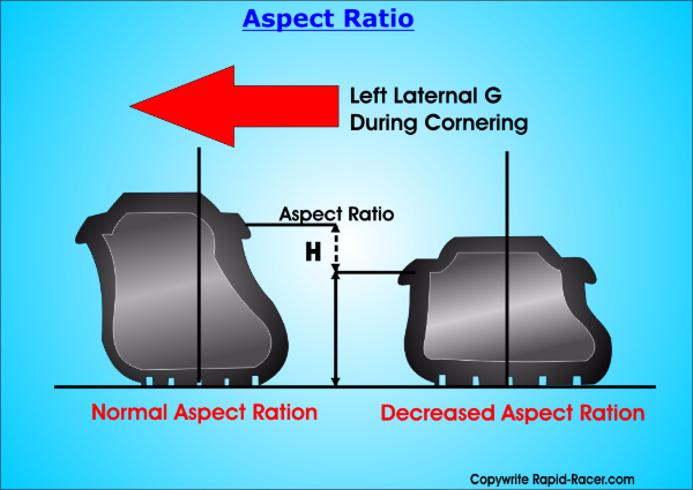
If we look at F1, we can see that the wheel has a generally small aspect ratio, but the tyre side-walls are still reasonable thick, the reason behind this is that the tyre actually contributes towards the car´s suspension. Due to the fact that some 2,000kg of down force can be generated, and incredible high spring compression rate would be needed to compensate for this. Using the tyres as a way to absorb some of the forces on bumps negates this fact and contributes towards the overall suspension of the racecar.
Reduced aspect rations of tyres also have the effect of increasing the CF (coefficient of drag). When a tyre has download acting through it, it is the CF that can mean a tyre could generate more force than is transferred through it.
Tyre Pressure
If we look at the tyre pressures indicated by the manufacturer, especially in road cars, then we have a good guide line to start from. From a performance point of view, tyre pressures were one of the only adjustments, early racers had to make adjustments on track to their car´s handling characteristic, with respect to oversteer and understeer handling balance.
With the advancements of suspension systems and the amount of adjustments that can be made, tyre pressure adjustments are not going to reap the huge performance gains. Having said that a few psi (pounds per square inch) increases can still make a difference in moderation. With quicker responding and more direct feel handling characteristics. This will come down to the drive line layout, and specifications of the current suspension set up.
Generally speaking a tyres CF (coefficient of friction) will increase with tyre pressure, meaning more grip for a given download force acting through it. This is up until the optimum levels are reached, past this point the CF will reduce. The CF directly relates to the tyre pressure effect on the contact patch.
In an ideal situation we would want the front and rear tyre to heat up equally, also for there to be even tyre temperatures across the contact patch. This results in a balanced car utilising grip on all tyres and equal wear rates both front to back and across the contact patch.
Problem | Possible Causes |
|---|---|
Too Much Tyre Pressure. | - Increased tyre temperature at centre. |
Too Little Tyre Pressure. | - Increased tyre temperature at inside and outside edges. |
Front Tyres going off. | - Increased understeer. |
Rear Tyres going off. | - Increased oversteer. |
Tyre/ tire pressure in the rain has a huge effect on Aquaplaning and is sometimes overlooked- have a look at the diagrams below to get an idea of the footprint in wet conditions. It has been know for aeroplanes to have over inflated tyres to help reduce aquaplaning- but please refer to your manufacturer for any technical recommendations specific to your product.

Fully Inflated Tyre/ Tire.
Under Inflated Tyre/ Tire with reduced footprint.

Extremely Under Inflated Tyre/ Tire, with low footprint.
Tyre Temperature

Any frictional forces generate heat, tyres ability to generate grip depend on heat. A tyre which is not up to temperature will not have a high CF (coefficient of friction) and produce less grip capacities, a tyre which is outside its operating temperature will have a reduced CF and reduce grip levels.
Extremely high tyre temperature can also result in blistering and chunking, which effectively destroy the rubber compounds construction. Proceed to drive a tyre in this condition and it will fall apart on your rims.
Successful tyre management, can be seen as successful heat management. The driver on the grid with the most amount of tyre grip, if all things are equal (wear rates etc.), will be pushing the tyre hard enough to generate heat and achieve a thermal balance, but not pushing too hard to exceed the tyres optimum temperature range.
In an ideal situation, you would like an even front to rear tyre temperature range, also with each tyre having even contact patch heat distribution. This will create a evenly balanced understeer and oversteer handling car, with good mechanical grip across the tyre. Push the front end too much and understeer will result, reducing turn in response. Push the rear end too much, oversteer will result, with increased potential for spins.
It is critically important to manage the tyre´s temperatures effectively, especially at the beginning of a race on fresh rubber. If you do manage to over heat the tyres, increased wear rates and lack of traction will be your reward.
