As we increase the tuning potential of the engine, the fuel system becomes more strained due to the ever increasing need to increase power. By upgrading the various fuel system components it is possible to keep in check the various demands while also ensuring engine reliability, which becomes more of a problem as the engine is upgraded from original specifications.
The fuel system is originally designed with making different constraints and pre-defined criteria in a aid to achieve the following: engine power, Fuel efficiency, emissions levels, reliability, drivability under different throttle requirements, maintenance intervals, diagnostic abilities and engine tuning.
Fuel System Components
1. Fuel Injectors
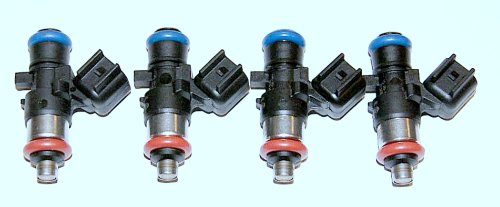
Sprays a fine mist of fuel into the combustion chamber of each cylinder or throttle body, depending on design.
The fuel injectors are driven by the fuel pump and their job is to spray a fuel and air mixture into the combustion chamber, ready to be ignited to produce power to the driven wheels. The fuel injectors are basically a nozzle, with a valve attached, the nozzle creates a spray of fuel and air droplets (atomisation). This can be viewed similar to that of a perfume dispenser or deodorant can in principle, spraying a fine mist.
The valves in the system are controlled by the EFI (electronic fuel injection system) which is governed by the the ECU (electronic computer unit). The whole system uses a multitude of different sensors around the engine to precisely adjust the required air to fuel mixture. This increases engine efficiency compared to older technologies like carburettors, which relied on the air to fuel mixture being sucked into the intake manifold.
The whole fuel system delivers the petrol or diesel from the fuel tanks into the combustion chamber, with a pre defined mixed air to fuel ratio. As we upgrade other components of the engine, fuel injectors ability to remain being efficient at converting this mixture into a fine mist also decreases as standard fuel injectors always have a flow rate limit designed from specifications. Upgrading fuel injectors to higher flow rated components for their original specifications, is highly recommended as engine power increases.
The needs of the engine fuel requirements increase with power gains, larger fuel injectors are able to deliver more fuel flow rates. This is required once the engine has reached a certain level of tune and performance level. Otherwise there is a risk of the engines running lean, which could lead to damage or unreliable characteristic during high throttle load periods.
2. Fuel Pump
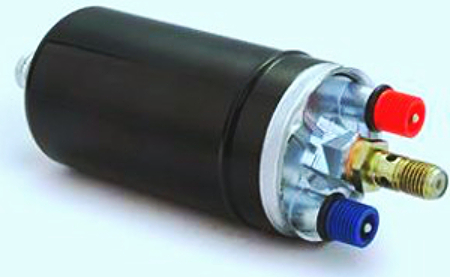
The fuel pump is used to pump the fuel from the fuel tank, via the fuel lines into the fuel injectors, which spray the fuel into the combustion chamber- in order to create combustion. There are two types, mechanical fuel pumps (used in carburettors) and electronic fuel pumps (used in electronic fuel injection).
If engine tuning or performance upgrades are present, then the fuel pump capacity, could potentially be an issue. Depending on your exact upgrades and future goals, fuel pump upgrades might have to be a consideration for reliable engine performance.
3. Fuel Filter
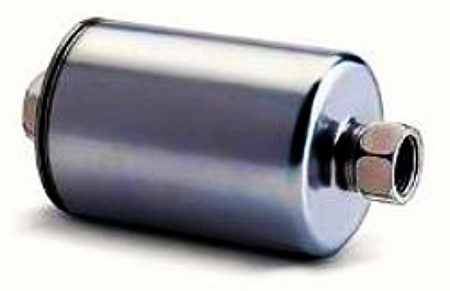
Purifies fuel prior to entering the fuel system, from the fuel tank.
The fuel filter has the job of making sure no contaminants enter the fuel pump, fuel lines or fuel injectors. Rust, dirt and paint can be present in the fuel tank and will cause premature wear or damage to the vital parts of the fuel system, also it can impact the engines efficiency to make power.
By having a fuel filter in place, we eliminate that problem, so it is vital to keep your maintenance service schedule up to date. Clogged filters with have a marked effect on performance forcing the engine to run lean. The filter itself is normally a in-line cylinder, with a paper filter present and all fuel from the fuel tank is forced to pass through it. There are reusable filters, these need cleaning before refitting, or replacement. Great care needs to be taken when working on the fuel systems. Safety must be at the top of the agenda when working with flammable substances.
4. Fuel Tank
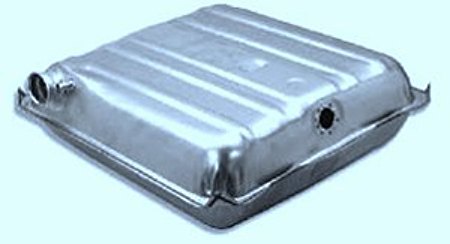
This stores and protects fuel prior to entering the fuel system. Normally slightly pressurised to aid in fuel delivery. Absorbs emissions from the fuel, in the old days fuel caps were vented.
Unlike the dramatic explosions in the movies, the main aim of the fuel tank is to protect the occupants in the event of a accident from such events. They can be constructed from metal or high density polyethylene plastics and are designed not only to hold large enough volumes of fuel, but resist leakages and vapour escaping from the system.
Normally located at the rear of the vehicle to minimise the risk of the fuel igniting under front end collisions, the system is closed except access through the filler cap. The system normally will have a gauge sensor located, feeding the information to the driver behind the wheel, also with normally a 30 mile reserve warning light indicating low fuel levels depending on the fuel tank size and vehicle specifications.
5. Fuel Lines
Fuel is transported from the fuel tank to the Injectors and unused fuel is returned to the tank via the fuel lines.
6. Pressure Regulator
This device monitors fuel pressure at the fuel injectors, if the predefined pressure (depending on sensor readings) is exceed, excess fuel is returned to the fuel tank.
7. Pulsation Damper
As the fuel Injectors rapidly open and close in time with the engines OTTO cycle, pressure fluctuations appear in the fuel system. A Pulsation Damper job is to help combat the pressure levels reducing fuel delivery inconsistency.
How Does a Fuel System Work
The fuel system in modern cars is a complex and intricate combination of components and electronics. Generally Fuel systems work in the following ways:
Fuel System Types
While the fuel system normally has the same individual components, there are a variety of different set ups and configuration, each having their own characteristics and suitability for different applications.
1. Carburettor
This device is used to draw air and fuel mixture into the engine, this transported via the intake manifold. The device works by creating a venturi effect, air entering the device is at ambient pressure, when air travels along the carburettor´s internal structure, it decreases in pressure and speeds up, due to the pipe narrowing. This narrowing is what causes the air to speed up and drop in pressure (Bernoulli effect).
This drop in pressure sucks fuel into the air from a fuel reservoir, creating the air and fuel mixture for the intake of the engine. The reservoir is at ambient air pressure and is constantly supplied with fuel via a fuel pump. A sensor monitors airflow and pressure and delivers the air to fuel ratio, depending on the airflow rates.
At the entrance of the carburettor, there is normally a choke, this device is used during cold start conditions to enrich the air to fuel ratio, aiding in combustion. It is closed during cold starts and restricts airflow to the carburettor inlet, resulting in more fuel being added to the intake manifold. It is normally lever operated from with in the car, or can be automatic in nature.
At the exit of the device is the throttle (basically a butterfly valve), this modulates the amount of air passing through the carburettor and is connected via a cable with the accelerator pedal. The throttle does not control the air to fuel mixture ratio, only indirectly by affecting the airflow rates. The throttle normally has a idle speed adjuster, stopping it from closing completely, this stops the engine stalling when the throttle is closed.
2. Single-point Fuel Injection
Single-point fuel injection is a evolution of some of the problems associated with earlier fuel systems and is derived directly from pressure carburettors.
The carburettor was replaced with fuel injectors, which squirted fuel into the intake manifold, these injectors where pressurised and driven via a fuel pump. The fuel was controlled via engine speed and airflow rates, also the system normally had a idle speed control valve, which bypassed the throttle, when it was closed, preventing engine stall.
This resulted in a more controlled and efficient way of delivery the fuel and air mixture, before it entered the combustion chamber, via the inlet valve. Single-point fuel injection can also be controlled via electronics, which is a further enhancement to the system.
3. Electronic Fuel Injection
Electronic fuel injection (EFI) is more efficient in its delivery of the air to fuel ratio then previous injection methods. This is because electronics and a array of other sensors were introduced into the system, which were controlled centrally by the ECU (Electronic Control System).
Sensors include airflow meter, ignition coil, coolant temperature sensor, throttle sensor and oxygen sensor in the exhaust system. With all these sensors, precise fuel delivery is possible, via fast calculations with predefined parameters with in the ECU. All following fuel injection from this point onwards, would be electronic in nature, due to ever stricter emission controls and the strive for more efficient power delivery.
How Does Electronic Fuel Injection Work?
Air is drawn into the engine via the induction system, this can be naturally aspirated or via forced induction (turbo or superchargers). As it passes through the air filter a MAF sensor (Mass Air Flow) reads the flow rates and updates the ECU, which with the other sensor readings calculates the fuel ratios for the fuel injectors.
As air enters the intake manifold, fuel injectors spray atomised fuel into the air stream, creating the air and fuel mixture. The fuel injectors are controlled by the ECU (Electronic Control Unit), to deliver the exact fuel requirements. The vaporised mixture is normally at a air to fuel ratio of 14.7:1 (Stoichiometry).This mixture in multi-point fuel injection, passes the Intake valves and ends up in the combustion chamber, on the cylinder's intake stroke. This is then compressed and ignited to create power for the crankshaft. In single-point fuel injection, the mixture would be delivered to the throttle body.
4. Multi-point Fuel Injection
Most petrol engines in operation today have multi-point fuel injection systems in place, this means that each individual cylinder has its own fuel injector. Fuel is delivered just above the intake valve in the intake manifold, rather than in single-point fuel injection, which would have one injector in the throttle body. This is an evolution of the single-point injection system.
Multi-point fuel injection is possible because of the introduction of Electronic Fuel Injection and all the sensors controlled by the central CPU. This method of fuel delivery has the following advantages over Single-Point Injection:
5. Indirect Injection
Indirect fuel injection is normally only used in diesel engines, the injectors are normally located in a pre-ignition chamber just of the main combustion chamber. Once the fuel as had a chance to atomise fully, this then mixes with the intake air from the induction system, on the intake stroke, ready to be compressed for the power stroke. Glow plugs are needed in cold start conditions, to heat up the fuel to aid in combustion, until the engine reaches normal operating temperatures.
Pretty much all diesel engines used this design until technology advanced with the now favoured direct injection method. Advantages of the indirect injection system at the time included:
6. Direct Injection
Further fuel Injection advancements have evolved with the direct injection, very similar to multi-point fuel injection and still utilising electronics with a centrally controlled ECU and sensors. This system has fuel injectors which are located in the combustion chamber, as opposed in the intake manifold.
Even more control can be had over the air to fuel mixtures and variations of this mixture is possible under different engine loading criteria. This results in even more engine efficiency, with reduced pumping losses and increased fuel economy. Multiple injection phases are possible in different phases of the OTTO cycle, as fuel does not need to by past the intake valve. The advantages of this co-inside with the different fuel delivery rates. Fuel injection pressures are also increased compared to other fuel injection systems (up to 2,000 psi).
This system also lends itself to both petrol and diesel fuelling types and seems to be the standard for all engines manufactured from this time onwards.
7. Direct Injection Fuelling Phases
Ultra Lean Burn - used in braking phases, idling or constant speed situations. Fuel can be injected on the engines compression stroke, instead on the intake stroke, the fuel injection flow rates are reduced by the CPU. Vastly improved fuel economy is achieved compared to multi-point fuel injection systems.
Stoichiometry - used in medium power requirement situation, the normal fuel injection flow rates apply and are injected in the intake stroke of the OTTO cycle.
Full Power - when full power is required, under hard acceleration and heavy loads, the fuel injection flow rates are increased and running richer than normal. This is delivered during the intake stroke of the OTTO cycle.
8. Spray Guided Direct Injection
This design is the standard specification for direct injection, with the fuel injectors located at the top of the cylinders.
9. Wall Guided Direct Injection
The injector is located in the side of the combustion chamber, fuel is sprayed onto a specially shaped cylinder head to aid in atomisation of the fuel.
